Selling a House in Probate: The Iowa Procedure, Step by Step
Most guides to selling a house in probate describe California. Iowa has no overbid auction and no 90 per cent rule. It has a five step court process, and one clause in the will that can switch almost all of it off.
Selling an Inherited House in Iowa: Probate, Taxes and Your Options
Most of what you will read about selling a house in probate is written about California, and it does not describe what happens in an Iowa courtroom.
They tell you about full versus limited authority, a 90 per cent of appraised value rule, and an overbid auction where a stranger turns up at the confirmation hearing and takes the house out from under your buyer. Those are real, and they are the Independent Administration of Estates Act, a California statute. Iowa has none of it: no overbid procedure, no statutory percentage of appraised value your sale has to clear, and no full authority granted by the court.
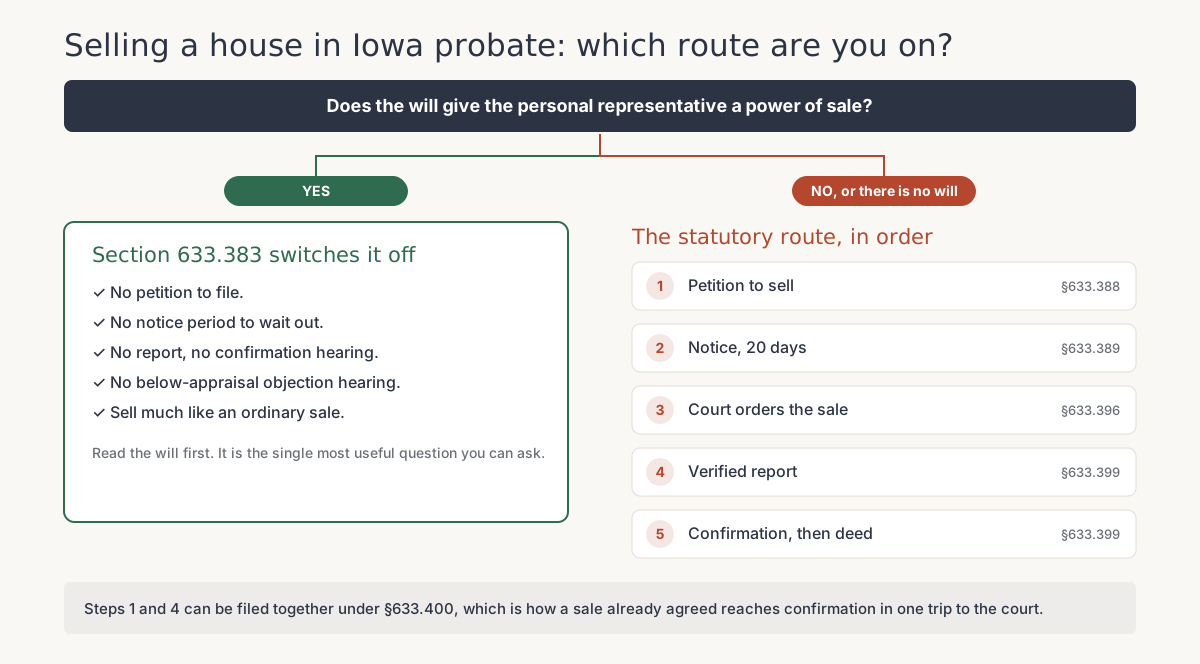
What Iowa has instead is a five step paper process: petition, notice, order, report, confirmation. It is slower than the guides suggest in one respect and much faster in another, and there is one clause in the Code that skips almost all of it. This page walks the actual sequence.
The sequence, in order
| Step | What happens | Iowa Code |
|---|---|---|
| 1 | Petition to sell, giving your reasons | 633.388 |
| 2 | Notice to interested persons, unless waived | 633.389 |
| 3 | Court orders the sale, on the terms it sets | 633.396 |
| 4 | You sell, then file a verified report | 633.399 |
| 5 | Court confirms and orders the deed delivered | 633.399 |
Steps 1 and 4 can be filed together under section 633.400, which collapses a good deal of the waiting. More on that below, because it is the practical trick in the whole process.
First: check the will, because it may skip all of this
Before you plan around any of the above, read the will for a power of sale.
Iowa Code section 633.383 is four lines long and it is the most valuable thing in this article. Where the will gives the personal representative power to sell, mortgage, lease, pledge or exchange estate property, the statutory requirements with reference to procedure for such purposes shall not apply.
That is the whole petition, notice, order, report and confirmation sequence, switched off. A competently drafted Iowa will usually contains that power. If yours does, you can market and sell the house much like an ordinary sale, and the timeline question becomes one about the estate's cash and the creditor period rather than the court's calendar.
So the first question for the estate's attorney is not "how long will the court take". It is: does this will contain a power of sale?
If the answer is yes, most of the rest of this page is background. If there is no will, or the will is silent on selling, the statutory route applies and the sequence below is what you are doing.
Step 1: the petition, and why the reason you give matters
Section 633.388 requires the petition to set out the reasons for the application and describe the property. It can ask in the alternative, to sell or to mortgage or to lease, and it can treat several parcels differently.
The reasons available are set by section 633.386: payment of debts and charges, distribution of the estate, or any other purpose in the best interests of the estate.
That third ground is deliberately open. The estate does not have to be insolvent and no creditor has to be pressing. An empty house consuming insurance, utilities and property tax while three heirs live in different states is not in the estate's interests, and that is enough to plead.
One exclusion matters. Section 633.386(1) reaches everything except exempt personal property and the homestead, which subsection 3 handles separately: the homestead may be sold only if it has not been set off to the surviving spouse and the spouse has not elected to occupy it. Section 561.11 is why. On the death of either spouse the survivor may continue to possess and occupy the whole homestead until it is otherwise disposed of according to law.
In plain terms: if a surviving spouse is living in the house, the adult children cannot have it sold out from under them, whatever the will says. A surviving spouse also has an elective share under section 633.238 of one third in value of the real property the deceased held during the marriage. Where there is a surviving spouse, the house is not simply an estate asset to be liquidated.
Step 2: notice, and the clause that removes it
Section 633.389 requires notice on all persons interested in the property once the petition is filed, served in accordance with section 633.40. Under that section the court fixes a hearing not less than twenty days after the notice is served, unless it finds good cause to shorten it.
Twenty days is the number to plan around. It is also avoidable in two circumstances, both spelled out in section 633.389:
- Notice is waived in writing by the interested persons, or
- all interested persons are also personal representatives and have signed the petition.
That second clause fits a very common Des Moines estate. Two adult children, both named as co-executors, both want the house sold. They are the only distributees, they are the personal representatives, and they have both signed. The notice requirement falls away and the court can act on the petition.
Section 633.389 also defines who counts. "All persons interested" includes only distributees in the estate and persons who have requested notice as provided by the probate code. It is not everyone who thinks they have a stake. A neighbour with an opinion, or a cousin who is not taking under the will, is not on that list.
Somebody can stop the sale, but they have to pay for the privilege
There is one route for an heir who objects, and it is not free. Under section 633.394, any person interested in the estate may prevent a sale by giving bond to the satisfaction of the court, conditioned on paying the demands against the estate that the court requires, up to the value of the property kept from sale. Keep to the bond's conditions and the property passes by descent as though there were no debts. Break them and it becomes liable for the debts again.
Very few people post that bond. It is worth knowing it exists, because it turns "my brother is blocking the sale" into a concrete question with a price attached.
Step 3: the order, which sets your terms
Section 633.396 governs what the order says. It describes the property, may set the sequence in which parcels are sold, and may direct whether the sale is at private sale or public auction. It may prescribe the terms, conditions and manner of sale.
Two powers in that section are the closest Iowa comes to the California rules people expect, and both are discretionary. The court may provide for an appraisal for its guidance as to value, and may decide whether the personal representative should deposit additional bond. Neither is the automatic requirement national articles describe, and no statutory percentage of appraised value applies.
The order stays in force until the court terminates it, so a sale that falls through does not send you back to step one.
If the order does direct a public auction, section 633.397 requires notice published once a week for two consecutive weeks in a county newspaper. Most sales of a single family house are private and never touch this.
Step 4 and 5: report, confirmation, and the deed
This is the part that surprises sellers, so read it before you agree a closing date.
Under section 633.399, after making the sale the personal representative files a verified report with the court. The court examines it, and if satisfied the sale was at a price and on terms advantageous to the estate and made in conformity with law, it confirms the sale and orders the personal representative to deliver a deed.
The deed is delivered on the court's order after confirmation. It is not a formality happening quietly while the title company works: it is the event that authorises the deed.
The same section carries a hearing trigger. Where the property was sold at private sale and has been appraised for the purpose of the sale, and sold for less than the appraised value, the court may set a time and place for a hearing on the report and prescribe notice to all interested persons, any of whom may file written objections before the hearing.
Note the shape of that. It is not an overbid where a competing buyer bids the price up in the courtroom. It is an objection procedure, and it is discretionary rather than automatic. The practical consequence is the same though: selling below the appraised value invites a hearing, and a hearing costs you weeks. If your buyer is coming in under an appraisal that exists, expect the timeline to stretch and be ready to explain the discount in the report.
If the court is not satisfied, it may reject the sale outright and enter such orders as it deems advisable.
Filing the report with the petition
Section 633.400 allows the report of a private sale to be joined with the petition under section 633.388.
This is the sequencing experienced probate attorneys use, and it is not obvious from the statute list. Rather than petition, wait, market, sell, report and wait again, the personal representative agrees a contract subject to court approval and files the petition and report together. One trip to the court, one order, one set of notice.
Ask about it by name. If your attorney is filing them separately when the buyer is already lined up, there is usually a reason, but it is worth hearing it.
A Beaverdale example. Your father dies in March with no will. The house is worth about $215,000 and needs a roof. You and your sister are appointed co-administrators in April.
You agree a cash sale in May at $186,000, contract subject to court approval. Because you and your sister are the only distributees and you are both personal representatives who have signed, the notice requirement under section 633.389 does not apply.
Your attorney files the petition and the report together under section 633.400, pleading the best interests ground: the house is empty and needs a roof the estate cannot fund. The court orders the sale and confirms it, and the deed goes out. Nobody had an appraisal done, so the below-appraisal hearing trigger never engages.
That is the fast version. Add a contested sibling, a surviving spouse in the house, or an appraisal your price falls short of, and it lengthens considerably.
What none of this changes
Two things run on their own clocks regardless of how quickly you sell.
The four month creditor period does not shorten because the house sold in month three. Selling early means the money sits in the estate account while the clock finishes, which beats starting to market in month ten. More in our guide to how long probate takes in Iowa.
The tax position is not affected by the route either. Your basis is the fair market value at the date of death under IRS Publication 551, whether the court confirmed the sale or a power of sale in the will made confirmation unnecessary. Federal estate tax applies only above $15,000,000 for a death in 2026, so it will not reach a Des Moines house. The full tax picture for an inherited house covers property tax and the homestead credit, which are the costs that actually accrue while you wait.
What a buyer needs to understand, and what it costs you
A house being sold through the statutory route is harder to sell, and it is worth being honest about why.
Your buyer is signing a contract subject to court approval, so the closing date is an estimate. A retail buyer with a mortgage, a rate lock and a lease ending has a real problem with that, and it is where financed offers on probate houses tend to fall over. It is not the condition of the house. It is the uncertainty of the date.
That narrows the pool, and a narrower pool means a lower price.
If the will has a power of sale and the house is in decent shape, list it. You will net more, and checking what the house is worth is a sensible first step.
If you are on the statutory route with a house that needs work, a cash buyer is the other option, and we will be straight about the trade: you get less money. Anyone offering you market value in cash is not being honest with you. What you get instead is a buyer who is not waiting on financing, who will sign subject to court approval without flinching, and who will not walk when the confirmation slips a fortnight. For an estate paying to insure and heat an empty house, a certain but lower number sometimes beats a higher one that may not survive to closing. How our process works explains it in about a minute, and the questions we get asked most covers the rest.
Common questions
Do I need court approval to sell a house in probate in Iowa? Only if the will does not give the personal representative a power of sale. Where it does, section 633.383 disapplies the statutory procedure. Where it does not, you need a petition, an order and a confirmation.
Can a buyer outbid my buyer at the confirmation hearing? No. Iowa has no overbid procedure. That is a California rule under its Independent Administration of Estates Act. The Iowa Probate Code provides an objection route for interested persons, not competitive bidding in the courtroom.
Can the executor sell below market value? Yes, but the report has to satisfy the court that the price and terms were advantageous to the estate. If the property was appraised for the sale and sold for less than the appraised value, section 633.399 lets the court set a hearing with notice to interested persons, who may file written objections.
How long does the court part add? Where notice is required, section 633.40 sets the hearing not less than twenty days after service, and the court can shorten that for good cause. Where all the distributees are also personal representatives who signed the petition, notice is not required and it is a matter of the court's own turnaround.
Do all the heirs have to agree? They do not have to consent, but interested persons get notice and can object. An heir who wants to stop the sale outright has to post a bond under section 633.394 covering the estate's demands up to the value of the property.
What if the surviving spouse is living in the house? Then it is not straightforwardly saleable. Under section 561.11 the survivor may continue to occupy the whole homestead until it is otherwise disposed of according to law, and section 633.386(3) only permits sale of the homestead where it has not been set off to the spouse and the spouse has not elected to occupy it.
Last verified 25 August 2026 against Iowa Code sections 633.383, 633.386, 633.388, 633.389, 633.392, 633.394, 633.396, 633.397, 633.399, 633.400, 633.40, 561.11 and 633.238, and against IRS Publication 551 and the IRS estate tax page. This is general information about how Iowa's probate sale procedure works, not legal advice. The order of steps in your estate depends on the will, the court and the people involved, so take the will to an Iowa probate attorney.
Wondering what your house is worth?
Polk County publishes an assessed value for every property in Des Moines. Type your address and see yours on screen. No sign-up, and nothing to give us.
Look up my house value