Selling an Inherited House Fast: What You Give Up
You can sell an inherited house in Iowa in about two weeks. The question is what the speed costs you, and which parts of the wait were never negotiable. Written by a cash buyer, including the parts that argue against selling to one.
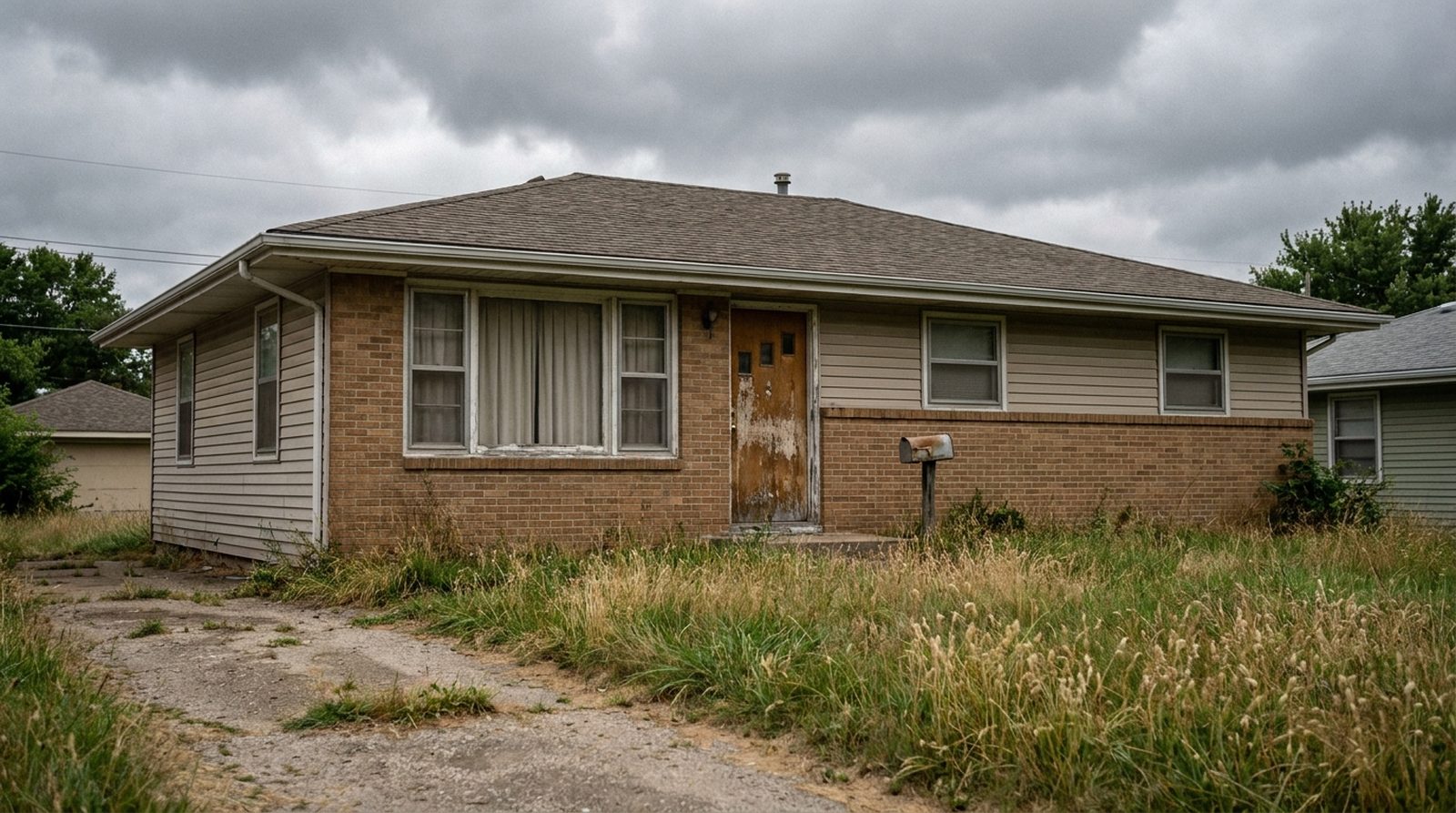
Selling an Inherited House in Iowa: Probate, Taxes and Your Options
You can sell an inherited house in Iowa in about two weeks. The question worth asking is not whether that is possible. It is what the speed costs you, and which parts of the wait were never negotiable in the first place.
We buy houses for cash in Des Moines, so treat this as a page written by an interested party. What follows is the arithmetic we would want a member of our own family to see before signing anything, including the parts that argue against selling to someone like us.
The short answer
A cash sale on an inherited Des Moines house typically nets you less than a listed sale. In exchange you get a closing date you pick, no repairs, no showings, no commission, and no financing that can collapse in week three.
That trade is worth taking in a narrow set of situations and is a poor deal outside them. The rest of this page is about telling the two apart.
There is also a hard limit on speed that no buyer can sell you around. If the estate has not yet given you the authority to sign a deed, nothing else matters, because you cannot sell what you do not yet own. Anyone promising to close in seven days without asking who has authority is either not listening or not planning to close.
What "fast" actually means here
Speed in a house sale is not one thing. It is four separate clocks, and a cash buyer only stops two of them.
| Clock | Listed sale | Cash sale | Who controls it |
|---|---|---|---|
| Getting the house ready | 2 to 8 weeks | none | You, and your budget |
| Finding a buyer | days to months | same day | The market |
| Buyer's mortgage | 30 to 45 days | none | The lender |
| Legal authority to sign | weeks to months | identical | The court |
The first three are what a cash buyer compresses. The fourth is untouched, and it is the one that most often decides how fast an inherited house really sells.
The part nobody can speed up
Before a deed can be signed, someone must hold the legal power to sign it. If the house was jointly owned with a surviving spouse, or sat in a living trust, that is already settled and you can move immediately. Otherwise the estate has to give somebody that authority, and that is the court's timetable, not yours.
The useful move is not to wait for the estate to close. It is to sell during administration, which Iowa expressly allows. Where the will grants a power of sale, Iowa Code section 633.383 provides that the statutory procedure for court approval does not apply, and the personal representative can sell much like an ordinary owner. Where there is no will, or it is silent, the five step court procedure applies and a hearing cannot be set less than twenty days after service under section 633.40.
So read the will before you read any offer. That single clause is worth more weeks than any buyer's promise.
What speed costs, in numbers
Here is the comparison the industry usually presents badly. Take a Des Moines house worth about $200,000 in good condition that needs $18,000 of work.
The listed route. You spend $18,000 on the roof and the kitchen, and it takes six weeks. It sells for $200,000. Commission at 5.5% is $11,000. Seller closing costs, title work and the transfer tax run roughly $2,500. You net about $168,500, roughly four months after you started.
The cash route. You are offered $150,000, as-is, closing in fourteen days. No repairs, no commission, and we pay the customary seller closing costs. You net about $150,000, in two weeks.
The gap is around $18,500. Anyone who tells you that gap is not real is selling you something.
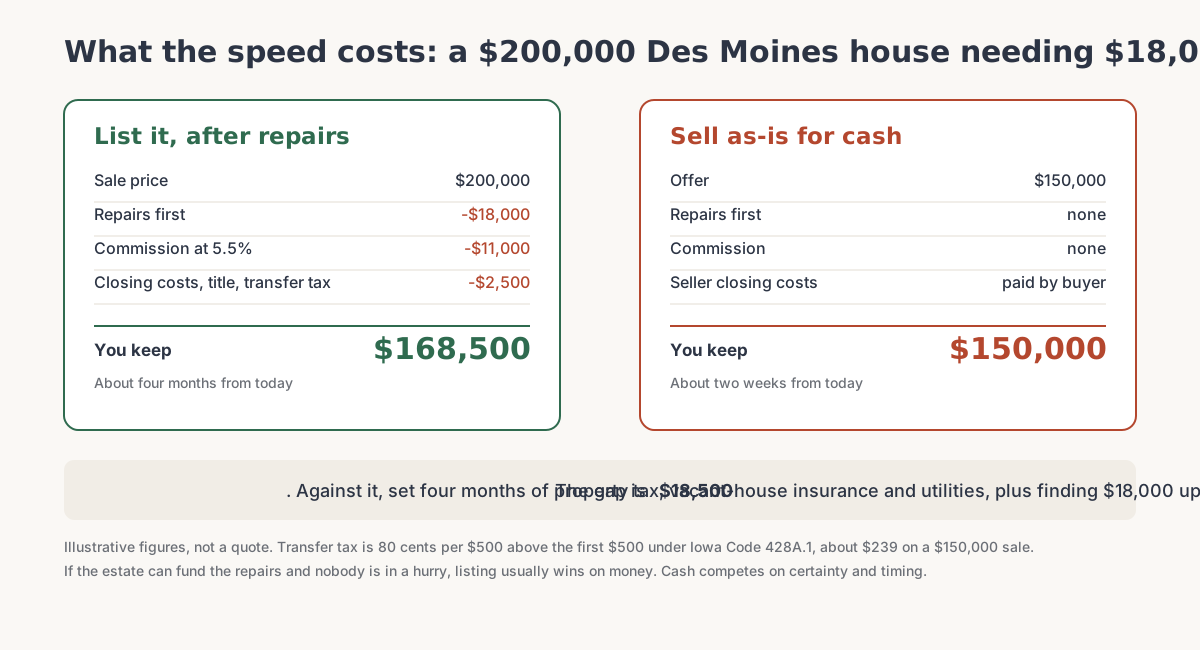
Now subtract what the four extra months actually cost. Carrying an empty Des Moines house runs to real money: property tax accrues throughout, insurance on a vacant house is dearer than an ordinary policy, and utilities have to stay on so the pipes do not freeze. Add the $18,000 you had to find up front, before the sale, which is the part that stops most estates.
The honest summary is that the gap narrows. It rarely closes. If you can fund the repairs and wait, listing usually wins on money. Our offer competes on certainty and timing, not on price.
The costs that do not change either way
Some things get charged whichever route you pick, and a fast sale does not avoid them.
Iowa charges a real estate transfer tax on the deed. Under Iowa Code section 428A.1, the tax is eighty cents for each $500, or fraction of $500, of consideration above the first $500. On a $150,000 sale that is about $239. Small, but it is not optional, and the county recorder will refuse to record a taxable deed until it is paid under section 428A.4.
Tax on the gain does not change either. Your basis resets to the value at the date of death, so most inherited sales produce a small gain or a loss once selling costs come off. Selling faster does not change that arithmetic. It only changes how long the house has to move away from its date-of-death value.
Two Iowa rules that genuinely make an estate sale faster
This is the part almost every national guide gets wrong, because these are state rules and they cut in the seller's favour.
The seller disclosure form. Iowa normally requires a written disclosure statement about the property's condition before the seller accepts a written offer, under section 558A.2. But section 558A.1(7)(c) exempts a transfer by a fiduciary in the course of administering a decedent's estate. An executor selling a parent's house usually does not have to complete it, which makes sense: you never lived there and do not know the boiler's history.
Read the exception to the exception, though. That exemption does not apply where the fiduciary is a living natural person who occupied the property at any time in the twelve months before the transfer. If you moved into your mother's house while sorting the estate, the form comes back.
Note also that from 1 January 2026 the disclosure covers the presence of lead service lines, added to section 558A.4 by 2025 Acts chapter 144. If you are selling a house you did live in, that is new since the last time you sold anything.
The septic inspection. This one can stop a closing dead. Where a house is served by a private sewage disposal system, Iowa Code section 455B.172(11) requires an inspection before any transfer of ownership, and the county recorder may not record the deed until a certified inspector's report is filed or the buyer signs a binding acknowledgment with the county board of health to do it later. A transfer by a fiduciary administering an estate is exempt from that requirement.
Most houses inside Des Moines are on city sewer and never meet this rule. It bites in the unincorporated parts of Polk, Dallas and Warren counties, where an acreage on a septic system can lose two weeks waiting for an inspector. If that is your house, ask about it in week one rather than week three.
How to tell a real cash buyer from a middleman
This is where speed goes wrong, and it is worth more attention than the offer price.
Some "cash buyers" never intend to buy. They sign a contract, then sell that contract to a third party for a fee. The technique is called wholesaling, and the assignment is the product. It is not automatically improper, and some wholesalers do it competently and disclose it. The problem is that you have no buyer until they find one, so a "fourteen day cash close" quietly becomes fourteen days of them shopping your house around. Telling them apart is the whole of the three businesses that use that pitch.
Iowa law draws a line here that is worth understanding. A person who, for another and for compensation, negotiates or attempts to negotiate the sale of real estate is a real estate broker under Iowa Code section 543B.3, and section 543B.6 makes even a single such transaction enough to bring a person within the chapter. Section 543B.7(1) excludes a person dealing as owner or prospective purchaser of property, but only where that person does not make repeated and successive transactions of a like character.
The penalty is not trivial. Where the real estate commission finds an unlicensed person has assumed to act as a broker, section 543B.34(3) requires a cease and desist order and a civil penalty of up to the greater of $10,000 or ten per cent of the sale price.
None of that protects your timeline, though. It is a reason for them to be careful, not a reason for you to relax. Protect yourself with three questions instead, or work through the longer list of cash buyer red flags, which also covers the extra rights you have if the house is in foreclosure.
Ask: are you buying this house yourself, or assigning the contract? A direct buyer says so plainly. Watch for "we or our partners", and read the contract for the word assign.
Ask: can I see proof of funds? A bank statement or a letter from the institution holding the money, dated. Not a screenshot, not a letter from an affiliate.
Ask: who holds the earnest money, and is it refundable? This matters more than most sellers realise. Iowa requires a licensed real estate broker to keep earnest money in a common trust account at a federally insured institution under section 543B.46. An unlicensed buyer dealing on their own account has no such duty, so ask for the deposit to be held by the title company or the closing attorney, and put it in the contract.
The re-trade, and how to close it off
The most common way a fast sale goes wrong is not a collapse. It is a price cut a week before closing, after an inspection nobody warned you about, when you have already booked the movers and told your siblings the number.
Two lines in the contract deal with this. First, make the offer as-is with a defined inspection window that ends on a date, not on the buyer's satisfaction. Second, agree in writing that the price does not move for condition issues visible on the day of the offer.
A buyer who genuinely intends to close will accept both, because they already priced the roof. A buyer whose plan is to find a third party will resist, because they cannot commit to a price they have not yet sold on.
When selling fast is the right call
Take the certainty and the timing when:
- The estate cannot fund repairs, and the house cannot be listed as it stands without attracting the lowest sort of offer anyway.
- You live out of state, and every decision costs a flight or a favour.
- The house is full of forty years of belongings and that, not the price, is the wall you are stuck at.
- Several heirs need it finished, and dividing a cheque is easier than co-managing a renovation from three cities.
- The house is empty and carrying costs are running while everyone deliberates.
List it instead when the house is in decent shape, the estate can carry it, and nobody is in a hurry. In that case you will do better on the open market and we would rather tell you so now than waste your week. Start with what the house is actually worth before deciding anything.
A realistic fast timeline
For an estate that already has authority to sign, and a house on city sewer:
| Day | What happens |
|---|---|
| 1 | You send address, condition and who has authority to sign |
| 2 to 3 | Walkthrough, then a written as-is offer |
| 4 | Contract signed, earnest money to the title company |
| 5 to 12 | Title work, payoff figures, any court approval needed |
| 13 to 16 | Closing and funds |
Two weeks is realistic. Seven days is possible only where title is clean, authority is already in place and no court approval is needed. If the estate is still in administration and the will has no power of sale, the twenty day notice period in section 633.40 sits inside this timeline and cannot be compressed by agreement between you and us. Our how it works page sets out the steps in more detail.
Frequently asked questions
Can I sell an inherited house before probate finishes? Usually yes, with the court's approval, and often you should. Where the will gives a power of sale, section 633.383 disapplies the statutory procedure entirely. Waiting for the estate to close is generally the slowest available option.
Will a cash buyer really pay closing costs? We do, and most reputable buyers do. Ask which costs specifically, in writing. The transfer tax under section 428A.1 is a real charge on the transaction whoever pays it.
Do I have to fill in the Iowa seller disclosure form? Usually not, if you are selling as executor or trustee of the estate. Section 558A.1(7)(c) exempts a fiduciary transfer, unless you personally lived in the house at some point in the twelve months before the sale.
What if my sibling will not agree to sell? Then no cash offer helps, because a buyer needs every owner's signature. That is a co-ownership problem before it is a sale problem, and it is dealt with in our guide to selling an inherited house.
Is a low cash offer a scam? No. A low offer is an offer, and you can decline it. What deserves suspicion is a high offer that drops shortly before closing, a buyer who will not show proof of funds, or a contract you are asked to sign the same day. Those and the rest are set out in what to check before you sign.
How much less will I get? There is no fixed percentage, and anyone quoting one has not seen your house. The gap tracks repair cost, holding time and how saleable the house is as it stands. Get a listing opinion as well as our number, then compare them with the four months in mind.
Does selling faster increase my tax bill? No, and it often reduces it. Your basis is the date-of-death value, so a sale soon after the death tends to produce a small gain or a loss.
Where to start
Find out whether the will contains a power of sale, then get two numbers: what the house would fetch listed and repaired, and what it fetches as-is today. The gap between them, minus four months of carrying costs and the repair bill, is the real decision. Everything else is noise.
If you want our number to compare against, our FAQ covers how we arrive at it, and you can read about us before you call.
Last verified 26 August 2026 against the primary sources linked above: Iowa Code 428A.1, 428A.4, 455B.172, 543B.3, 543B.6, 543B.7, 543B.34, 543B.46, 558A.1, 558A.2, 558A.4, 633.383 and 633.40. The worked example uses illustrative figures, not a quote. This is general information about how Iowa law works, not legal or tax advice about your situation, and you should talk to an Iowa attorney about your own facts.
Wondering what your house is worth?
Polk County publishes an assessed value for every property in Des Moines. Type your address and see yours on screen. No sign-up, and nothing to give us.
Look up my house value